
Why Gen Yodha Has No Likes
You post something you're genuinely proud of. Maybe it's a lesson from a project that flopped. Maybe it's a question you've been too scared to ask anywhere else.
You hit publish.
And then the waiting begins.
Did anyone see it? Is 12 likes good or embarrassing? Their post got 200 likes and mine got 15. Maybe I shouldn't have posted.
Sound familiar?
The Problem With Likes
Likes were designed to make engagement easy. One tap, you're done, you've "participated."
But somewhere along the way, likes stopped being about connection and started being about comparison.
When you can see that someone else's post got 10x the engagement yours did, you're not thinking "good for them." You're thinking "what's wrong with me?"
And when you're chasing likes, you stop posting what's real. You start posting what performs.
That's not networking. That's a performance.
Feedback vs. Performance
Here's the thing: metrics aren't inherently bad. You should know if your content is reaching people. You should get feedback on what resonates.
The problem is when those metrics become public scorecards.
So we asked ourselves: What if you could get feedback without the performance pressure?
That's when we landed on a distinction that changed everything:
Feedback metrics = Data that helps YOU improve
Performance metrics = Data that lets others compare you
What Gen Yodha Does Differently
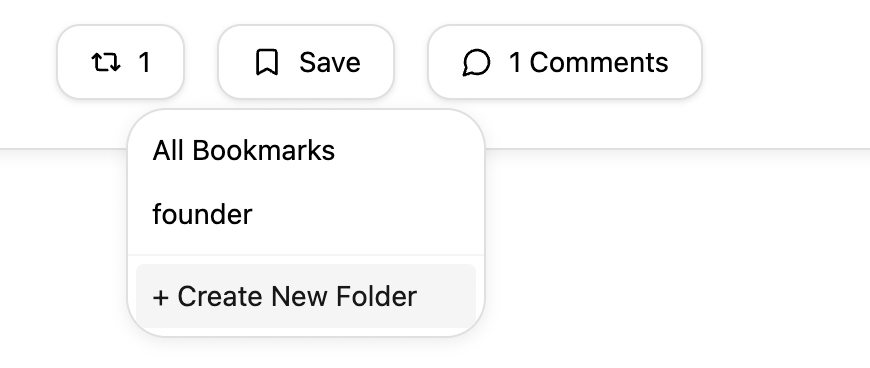
Save feature replacing likes on Gen Yodha
What YOU see (on your own posts):
How many people viewed your post
How many people saved it to their collections
All comments and replies
This tells you: Am I reaching people? Is this valuable? Should I write more like this?
What OTHERS see (on your posts):
Your content
Comments (they can read and add to the conversation)
Repost Count + Profile [this may help them find people who also resonate with your content]
They can NOT see:
Your view count
Your follower count
Any ranking or comparison to other posts
Why This Matters
When you remove public metrics, something shifts.
You stop asking "will this perform?" and start asking "is this valuable?"
You stop comparing your Day 1 to someone else's Year 3.
You post the question you actually need answered instead of the hot take you think will get engagement.
Your voice matters regardless of your audience size. That's not a tagline. That's a design decision baked into every pixel of Gen Yodha.
But Wait, What About Social Proof?
Fair question. If no one can see engagement, how do you know what's worth reading?
That's where saves come in.
When someone saves your post to their collection, that's a high-signal action. It means they found it valuable enough to come back to. It's not a mindless double-tap.
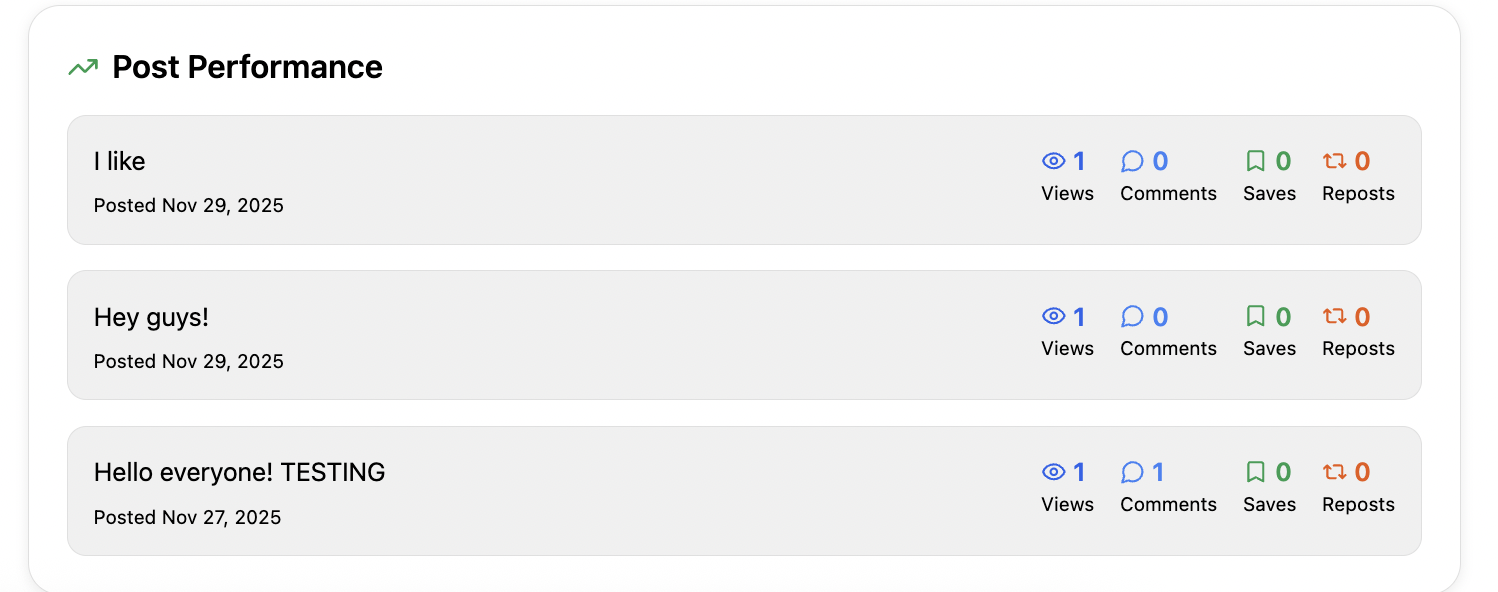
Post Performance Example From Gen Yodha
Your analytics dashboard can be screenshoted in case you need that for social proof elsewhere.
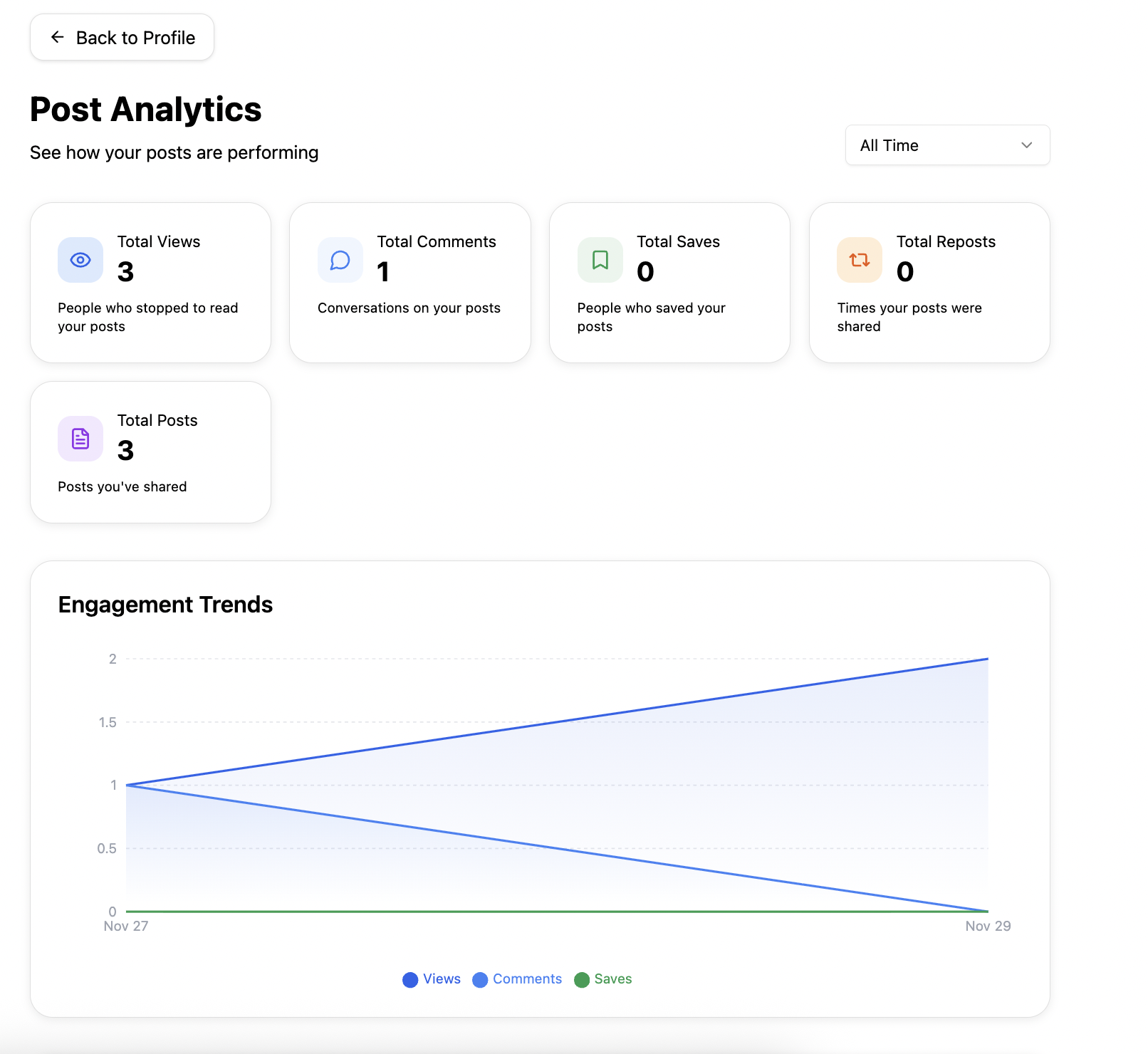
Analytics Dashboard Example From Gen Yodha
The Culture We're Building
No likes isn't just a feature. It's a filter.
The people who join Gen Yodha aren't looking for applause. They're looking for real conversations with people who get it.
They want to ask "dumb" questions without judgment. Share failures without performing vulnerability. Celebrate wins without humble-bragging.
If that sounds like you, you're probably a Gen Yodha person.
Gen Yodha is the anti-LinkedIn for 0-7-year professionals. We're building a space where your hustle matters more than your university/company brand name.
